Lost

LostThe sensation was familiar, but its duration was new. I hit the ground hard and bounced once. The soft, wet soil I landed on was very different than the hard marble floor of the apartment I lived in. My child threw me as hard as he could over the second-floor balcony railing and watched me all the way to the ground before he disappeared back into the apartment. Now on the ground, the backyard was quiet. Birds were chirping from the tall cypress that stood on the property line. The sound of a passing car came from the street, then silence. It was a typical quiet afternoon in the neighborhood.

I lay on my side, waiting for my child to come and return me to the apartment, but he did not, at least not right away. After some time had passed, I began to wonder if he could be engaged in another activity, perhaps playing with other toys or eating supper? The sun hid behind the next building, making it hard to tell whether it was dinner time. More time had passed, and the sky changed from blue to orange. I began to worry whether my child had forgotten about me altogether. Would one of his parents come pick me up instead, as they had before for other toys that met the same fate? Counting on them was risky; They never took count of the toys in his room, and since there were quite a few of us – he was an only child and the first grandson on both sides of the family – it could take a long time, perhaps even a miracle, for my absence to be realized! Calm down, I thought, there’s no reason to panic. At least not yet. I must think clearly to get myself out of this situation.

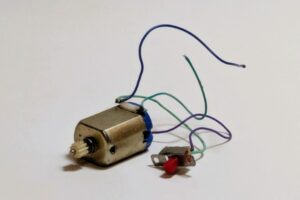
I ran a quick check of myself. A new ding decorated my bottom left, right where I hit the ground moments ago. It added to the other signs of damage I sustained from past falls during rough play. My battery compartment door opened when I hit the ground, and the two D cells rested in the rough grass nearby. Without them, I could not tell if my little DC motor or the mechanism’s gears were functioning.

The afternoon shadows stretched higher on the building side, and evening began to set. The only visitor I had the entire time was a gray stray cat who stopped briefly to sniff me before continuing his prowl. Soon after, the streetlights turned on. I could be spending the night in the backyard, but that was not necessarily a frightening thought. I mean, what’s the worst thing that could happen to me down here?

Movement! On the other side of the building, the top balcony! Another child, somewhat older than mine, appeared over the railing. Did he notice me? He sure did! I could tell. He looked down at the backyard, and once he spotted me, he stopped and concentrated for a few seconds. My white metallic body stood in contrast to the dark ground, but I was not sure how clearly I appeared in the dim light. The boy soon disappeared back into the apartment and, in a short minute, reappeared from the front entrance. He stood over me, picked me up, and examined me from top to bottom. Then, with me in hand, he walked around the area, looking for parts that may have fallen off me. He looked up at my child’s balcony, perhaps estimating the trajectory I followed down, perhaps looking for witnesses, then resumed his search. His facial expression was that of dismay. Damn right! Who would throw down a perfectly working space rocket like me?! I wondered if he, too, had been familiar with my child’s abusive treatment of his toys. Another minute, and he walked back up the stairs with me and my two D-cells in hand.

I was excited and relieved. Soon, he would knock on the door of my child’s apartment and present me to his parents. I will be taken in with thanks and appreciation, get cleaned up, and returned to the toy box. The parents would likely not scold my child for his actions. I saw them do that only once during my time with the family, when my child destroyed a brand-new fire truck during a tantrum. In any event, the two sets of grandparents seemed to compete over showering my child with new gifts, so new toys regularly replaced others that broke. One more flight of stairs, and I will be home again.

But when we reached the second-floor landing, the boy continued walking up the stairs. He moved fast, and I thought he missed his stop, but then quickly realized he had a different plan in mind.

We reached the top floor. The boy opened the door and walked in. This apartment had the mirror floor plan to the one I lived in, but with one big difference – it was a bigger family! I counted three other kids as he took me to his room and placed me on the desk. He inserted the batteries into my compartment and tried to close the cover, but despite several attempts, it still would not close. My body, mangled by the fall, prevented that from happening, and the boy seemed to notice that. He held the batteries in place with one hand and tried to start me. I could feel my gears were jammed, but I had no way of sharing that fact with him. He proceeded to give me a thorough examination under the desk light, looking for a way to repair me.

My mind raced. What were this boy’s intentions? Why did he not simply return me to the child’s family? Why did he bother with trying to fix me? He left for a moment and returned with some tools: a screwdriver and a pair of pliers. An operation?? Just before he could use any of these tools, his mother called everyone to dinner. He rested me on the desk and left for the kitchen table.

I did not know how much time I had left. My child would be sitting for dinner about now as well, playing with his food while his parents talked. The mother liked to light a cigarette after she finished her meal, and my child would follow the smoke rising to the ceiling as if hypnotized by it. I heard voices from the dinner table. Soon they will finish eating, and the boy will be back here to open me up. I had no time to lose! The batteries were still in my compartment. I checked my DC motor. It worked, but my gears would not move. I tried again. Nothing. I’m a cripple, I thought. Before I could sink into hysteria, the boy returned to his desk.

He tried to start me up, but his results were the same as mine. He played with me for a few minutes but seemed bored with that. Without my gears working, I was just a plastic Saturn rocket. I could tell he was bored with this game. Several airplane display models stood on the shelf over his bed. There were fighter planes and an Apollo moon landing model. Perhaps he would place me next to them? Being a static display wasn’t what I had in mind for myself, but if he wasn’t going to return me to my child, it didn’t seem like a bad option. Oh, my naiveté!

The boy removed my batteries and, using the screwdriver, carefully disassembled me! He appeared skilled and patient, finding the correct order to remove part after part, until I lay on the desk in pieces. He picked up the gear assembly and attempted to move it. Just as I sensed earlier, it was stuck beyond repair. He used his tools to try to unjam it, but after several attempts, he gave up. The boy put his head between his hands and looked at the array of parts scattered across the desk. Another minute, and he carefully removed the small motor from the gear assembly, careful to preserve the switch and tiny electrical wires. Using a pair of scissors, he fashioned a propeller from a piece of cardboard and attached it to the motor. He switched it on, and his eyes brightened when the tiny fan he made blew air in his face. The rest of me was shoved to the side of the desk.

It was time for bed. My child would be going to bed soon, too, I thought. Is he missing me right now? Did one of his parents notice my absence after all? Were they looking for me everywhere? Probably not, I realized, but there was a silver lining to my ordeal. It turned out that I was more valuable to this boy as parts than as a shiny toy to a spoiled child. The boy’s joyous face more than made up for my gloom as the lights were turned off for the night. At the end, I made this kid happy, and that’s all that matters to a toy.
 

August 28, 2025

Date

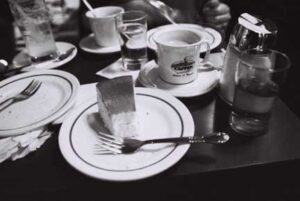
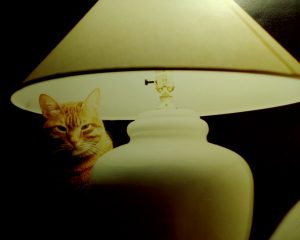
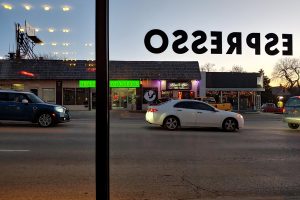
DateHe peeked at his watch. Ten minutes had passed. Ten minutes that felt like a hundred or longer. The server gave him a look when he walked to the table behind him, a look that combined wonder and pity with a sprinkle of disdain. He raised his near-empty water glass and slowly sipped from it as he clandestinely scanned the area. No new guests stood at the door or in the waiting area. He placed the empty glass on the table, hoping the server, who was busy with the party behind him, would notice it but not him, sitting there like a putz, taking up the table, taking up space, wasting time, alone, by himself, waiting. He managed to overcome the urge to look at his watch, but knew she was late. Very late. The waiter repeated the table order to the guests and would pass by him again momentarily. He concentrated on a new dilemma: Should he call her or not? What would that look like? Desperate, impolite, rude, childish, obnoxious, impatient? Better not call. Okay, he won’t. Still, where is she? Did she forget about the whole thing? Would she be surprised to see his number on her screen and be embarrassed to answer? What if she is on her way over, stuck in traffic, parking her car, getting off her Uber ride, about to walk through the door? That would be embarrassing. Will it seem too soon? He decided not to call, so what’s up with that? But if she was late for any of those reasons or any other he hasn’t thought about, why hasn’t she called? He would, of course he would. But she is not him. He barely knows her. Is she delayed by something, a traffic jam, an accident? Did something happen to her? Now you think like your mom, he thought. No calling. Definitely not calling.
“Can I get you more water?” The waiter stopped by his table on his way to the kitchen.

“Yes, please.”

He followed the waiter with his gaze taking note of the scenery again. No change. That has got to be some kind of record. I mean, how much of a wait time makes you a loser? Not enough, he thought, but he already felt like one.

The server returned with a water pitcher and refilled his glass.

“Can I get you something while you wait?”

Do you have dignity on the menu?

He nodded. The waiter returned to the kitchen.

The front door opened, and he perked up. A couple walked in and stood by the host station. He lowered his gaze and slowly began to melt into his chair. She will probably not show up, not tonight, not ever. He tried to get up from his chair, but he could not move. Not yet.


August, 28, 2025

עַל הַמִּקְלָט

על המקלטהפעם הראשונה שאני זוכר את עצמי יורד אליו הייתה במהלך מלחמת ששת הימים. ילד קטן, בן חמש, אוחז במעקה וממהר מטה במורד מדרגות הבניין מספר צעדים לפני אמי הנושאת את אחי התינוק. הסירנה מייללת רמות מאי שם, מהדהדת בחלל חדר המדרגות ומלווה אותנו אל המקלט הקטן והטחוב הממוקם מתחת לבניין. עמדתי בחלל הצפוף, בוחן בעניין את פניהם המודאגות של השכנים ומנסה להבין את הדרמה המתחוללת סביבי. בימים הבאים הוצמדו מספר מיטות מתקפלות לקירות המקלט ועליהן ישנו בלילות עד לתום המלחמה הקצרה. הזיכרונות העמומים שהותיר בי המקלט מאותם ימים הם הצפיפות באור העמום והרגשת הזרות בין מבוגרים שלא הכרתי. נוספו אליהם גם ריח העובש באוויר העומד והאבק שכיסה את הרצפה, המדרגות, וכל משטח אחר. אני זוכר את עצמי תולה עיניים בפתח החילוץ הגבוה שבקיר הדרומי ותוהה כיצד אוכל לטפס אליו במקרה חרום בהעדר סולם או כל מתקן אחר. המלחמה הסתיימה בלא שנדרשתי לחלץ את עצמי דרך אותו פתח חרום. המיטות קופלו ואוכסנו מחדש ואני המתנתי בקוצר רוח להתחיל ללכת לגן חובה. זיכרונות תלושים שאני נושא מאז, כמו היו תמונות דהויות באלבום ישן שלא צולם מעולם.
הפעם הבאה שחזרתי אל אותו חלל הייתה בכיתה ה’. מלחמת יום כיפור פרצה בשבת. באותו בוקר יצאתי לבית סבי וסבתי שהתגוררו לא רחוק מאיתנו כדי לרכב על האופניים הגדולות של סבי ברחובות הריקים. גלגל האופניים האחורי איבד אוויר לאיטו בגלל תקר קטן וחייב אותי לחזור ולנפח אותו תכופות. בין עצירה אחת למשניה שמתי לב לתכונה המתגברת של כלי רכב שנעו בכבישים. הבנתי בעליל שמשהו לא רגיל מתרחש. שיחה אקראית ששמעתי בין מרפסות ושהמילה “מלחמה” חזרה בה מספר פעמים גרמה לי לחוש הביתה מוקדם מהמתוכנן. בסביבות השעה שתיים בצהרי אותו יום ייבבה האזעקה הראשונה. שוב מצאתי את עצמי במקלט המוכר שהיה עמוס כעת בחפצים שונים שאוכסנו שם בחודשים ובשנים שקדמו למלחמה. היו במקלט יותר ילדים, שהיו גדולים יותר, והצפיפות הייתה רבה משהייתה שש שנים מוקדם יותר. ביומיים הבאים הקפדתי שלא להתרחק מהבית יתר על המידה כדי להיות מסוגל להגיע למקלט במהרה, אך בדיעבד הייתה זו הפעם היחידה במהלך אותה מלחמה בה ירדנו אליו.

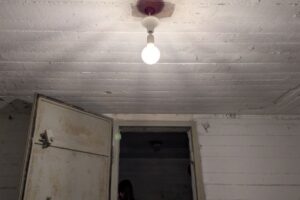
מלחמת יום כיפור הסתיימה ואנו חזרנו לחיים רגילים, אולם תקופה לא ארוכה לאחר מכן שבנו למקלט. הפעם היה זה ביוזמת בנות הכיתה שהכריזו לקראת סוף שבוע אחד על מסיבת כיתה בערב שבת. לאכזבתי הרבה החמצתי את המסיבה הראשונה כיוון שהייתי חולה, אך לזו שנערכה בשבוע שלאחר מכן הגעתי בהתלהבות רבה. היא נערכה במקלט הבניין של עירית, ברחוב תל חי. התאספנו שם, לבושים יפה, חדורי התלהבות וסקרנות מהולות בחששות ותקוות נעורים. המקלט היה ריק מחפצים לבד מספסל אחד או שניים שהיו צמודים לקיר. טייפ קסטות קטן ניגן אסופת להיטים שהוקלטו ממצעד הפזמונים השבועי, ונורה בודדה השתלשלה מהתקרה והאירה את החדר באור עמום. הצללים הכהים שריצדו על קירות הבטון החשופים הוסיפו לאווירה המחשמלת של אותו ערב רומנטי ראשון וקסום. דינה הדריכה אותנו בזריזות כיצד לרקוד שייק וסלואו כמו הגדולים, וכולנו חיקינו אותה בהתלהבות. הטייפ ניגן, ואנו נתנו דרור לגופינו הצעירים בתנועות שייק ימינה ושמאלה לקצב המוזיקה, בוחנים את הפנים והתנועות של הסובבים אותנו בניסיון ללמוד ולהשתפר. הרגעים המיוחדים יותר באותו ערב היו ריקודי הסלואו. בן ובת עומדים במרחק בטוח זה מול זו. הבן מניח את כפות ידיו על מותני הבת וזו מניחה ידיה על כתפיו של הבן, ושניהם נעים ימינה ושמאלה לקצב המוזיקה תוך שמבטיהם כמעט שאינם מצטלבים. במקום זאת הם מציצים לצדדים בתהייה, מי רוקד עם מי וכמה קרוב הם עומדים אחד לשנייה? ההתרגשות גואה והמחשבות מקוות שהשיר הזה יימשך ולא יסתיים מוקדם מדי או בכלל, כי להחזיק כך במותניה של בת לא היה עניין של מה בכך באותה תקופה. כמה גדולים הרגשנו, כמה בוגרים. כמה חופשיים! העתיד נראה ורוד מתמיד באותם רגעים, ואז הסתיים השיר. חלומות בהקיץ.

מסיבות הכתה הללו נערכו מספר פעמים במתכונת דומה בהמשך אותה שנה וגם הן נזנחו לבסוף לטובת דברים אחרים. המקלטים השונים בשכונה ביניהם נדדנו היו כולם באותו גודל ושידרו את אותה אווירה. טחב עמום, קרירות נעימה, וסוג של פרטיות מגוננת מהעולם שבחוץ. הם העניקו תחושת ביטחון לחוסים בהם בזמן מלחמות ותחושת פרטיות בעתות שלום. מקלטי הבניין הללו נבנו בפשטות וחסרו כל אמצעי הגנה מודרניים. האלמנטים העיקריים שהנחו את הסגנון הברוטליסטי-מינימליסטי שבו נבנו אלה היו תכנון בסיסי ופשוט וחסכון כספי. בניינים חדשים יותר שנבנו בהמשך צוידו במקלטים מודרניים יותר בעלי אמצעי הגנה יעילים יותר כגון דלתות הדף, מסנני אויר, כמו גם שטח גדול יותר המותאם לשהייה ממושכת. בהמשך, ועם התפתחותם של איומים טכנולוגים וביטחוניים גדולים יותר נזנחו גם מרחבים ציבוריים אלה לטובת הממ”ד. בין מלחמה אחת למשניה הוסיפו המקלטים הישנים לשמש כמחסן ציבורי לדיירי הבניין. מסיבות כיתה וריקודי דיסקו נדחקו מן הסתם גם הם אל העבר והנוסטלגיה.

השנה נפל דבר, ובמהלך המלחמה ביננו והאירנים מצאתי את עצמי חש שוב למקלט. הפעם היה זה מתחת לבניין דירות בלב תל אביב בו התגוררנו במהלך ביקורינו בארץ. עברה יותר מחצי מאה מאז אותה מלחמה ראשונה בה לנתי במקלט בית ילדותי, ולמרות זאת המקלט הנוכחי, גדול, מרווח, בטוח ומודרני יותר, שידר גם הוא את אותה קרירות טחובה, זרות ידידותית, וברוטליזם מגונן. גם במקלט הזה ריצדה נורה בודדת בכל אחד מארבעת חדריו. אבק ישן כיסה בו כל משטח אופקי או אחר, וחפצים שונים כגון שולחן מחשב ישן, נברשת מפורכסת וארגזי קרטון עלומים נערמו בכמה מפינותיו. אסופת הדיירים שהתקבצה אליו בכל התראת טילים הפכה תוך זמן קצר לקבוצה מוכרת, שהחברים בה מחליפים ביניהם חוויות, עצות תומכות, ושיחות מרגיעות. מדי פעם הצטרפו אל הקבוצה אורחים מזדמנים כדוגמת קבוצת בליינים שתויים למחצה מהפאב שבקומת הכניסה בערב מאוחר אחד או נהג אוטובוס ונוסעיו המעטים שחשו למצוא מחסה תוך כדי נסיעת בוקר מוקדמת. ילדים בני גילנו אז וצעירים יותר התכנסו מדי התראה בסדר מופתי בעקבות הוריהם בחדר האחרון, חדר המשפחות, מתיישבים על שמיכות פיקניק ומשחקים עליהן משחקי חברה באור הקלוש. היו גם מי מבאי המקלט שמצאו מרגוע בהאזנה למוזיקה או לקולות אחרים דרך אוזניות אישיות. המקלט הגדול היה שקט ברוב הפעמים בהן שהינו בו, ממתינים לשמוע את קולות המיירטים והנפילות, בוחנים את פני הסובבים אותנו ומחליפים חיוכים מרגיעים. הירידות למקלט היו כולן חפוזות אך התנהלו בסדר מופתי. העליות ממנו היו איטיות ומהורהרות. לא שהינו במקלט מעבר לזמן שנדרשנו להצטנף בו. הירידה אליו הפכה להרגל מעצבן אך הכרחי, ואנו השתדלנו לכבד את המעמד בהתנהגות רגועה ובטוחה. לא ידענו כמה זמן נזדקק לשהות בו בכל פעם שהתכנסנו בין כתליו, כמו גם כמה זמן תמשך המלחמה. בבוקר בו הוכרזה הפסקת האש עברתי מול הדלת שהייתה פתוחה עדיין, מוכנה לקלוט אליה דיירים ועוברי אורח. האור במורד המדרגות דלק כמו בימים הקודמים. ירדתי למטה לביקור פרידה, שואף לריאותיי את הטחב הקריר והמוכר ומודד את החלל הציבורי שהיה כעת לרגע כולו שלי. הספסלים, הכיסאות, כמו גם מצבור החפצים שאוחסנו בחדר האחרון היו מונחים שם כמקדמת דנא, מוכנים לארח את אורחי המלחמה הבאה או שמא מסיבת כיתה כלשהי, מה שיבוא קודם. מספיק עם הרומנטיקה הזו, חשבתי. האור החיוור ליווה אותי במעלה המדרגות אל ההווה המאיר שבחוץ. הרחוב סאן. החיים השוקקים שבו למסלולם במדינה הקטנה-גדולה שכל רחוב ושכונה בה הם עיר מקלט.

English Translation
July 12, 2025


לֶחֶם

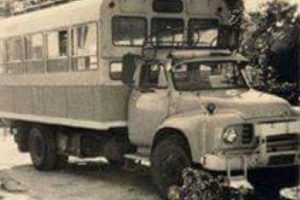
טיולית badford ©1969, friedman-tours.com

הסיפור הבא התרחש לפני שנים רבות בקצה רמת גן, במקום שבו רחוב הירדן הזורם בנתיב מקביל לנהר ממזרח שעל שמו הוא קרוי. שם, היכן שהוא פוגש ברחוב אלוף שדה, זה המושך משכונת רמת אפעל מערבה אל הערים גבעתיים ותל אביב. במקום שבו עומדים כיום בתי דירות גבוהים המשקיפים אל גגות הרעפים האדומים של שכונת רמת חן שמדרום. על אותו שטח ממש שכן פעם בניין אבן חד קומתי. היה זה בניין לבן וסתמי, נצר לארכיטקטורה הסגפנית שאפיינה את ענף הבניה בשנותיה הראשונות של העיר. בניין חסר חן או יחוד, שלא הסגיר את ייעודו בכל אופן לעוברים ולשבים. אלה מצידם היו חולפים על פניו מבלי משים, אצים לדרכם ברחובות העיר שנדמו אז כאילו היו גדולים ורחבים והיום גדושים ופקוקים הם כעורקיו של חולה לב רגע לפני שהתנועה דמה בהם. על אף ששכן אך כקילומטר בודד מבתינו, לנו הילדים נתפס אז הצומת כמקום רחוק, כזה שפוגשים רק אם חולפים דרכו בנסיעה. נהגנו לחצותו בדרך כלל בסופי שבוע, דחוסים בסדר ישיבה קבוע על הספסל האחורי של החיפושית הלבנה בדרכינו ליעד כזה או אחר. כמו רבים אחרים, גם אנו לא שעינו אל אותו בניין, והוא נטמע אל תוך השעמום האורבני של בתי מגורים דו ותלת קומתיים שניצבו לאורך רחובות העיר המתפתחת ובאזור כולו.

כל זה השתנה ביום אביב חמים אחד, לקראת סוף כיתה ה’. ישבנו אז בני ובנות הכיתה לאורך ספסלי משאית טיולים רועשת שהובילה אותנו מבית הספר אל שיעור שחיה בבריכה העירונית. המשאית חרקה וגנחה לאורך המסע בן עשר הדקות כמו היתה ספינת משא החותרת דרכה בין גלי ים סוערים. משהגיעה זו אל מול בניין האבן האטה ועצרה, גומעת לעצמה שניות ארוכות של מנוחה נוהמת לאורו של הרמזור האדום שבצומת. השקט הרגעי אפשר לנו שניות יקרות של שיחה בטונים נמוכים יותר, אך אלו נדמו גם הן משהתחוורה החוויה החדשה בנחירינו. מבעד לחלונות המשאית הפתוחים חדר ואפף אותנו ניחוח עשיר ומגרה של לחם טרי באפייתו. מבטינו תרו מצד לצד, מנסים לאתר את מקור הריח. תוך שניות נפתרה החידה. בית האבן הלבן, חסר הגינונים והצביון הכיל בתוכו מאפיה קטנה! והריח, אוה הריח. מהסוג שלא חשוב מתי אכלת לאחרונה וכמה ואם בכלל רעב אתה. לחם אכול תאכל, עכשיו ומיד. בלי חמאה, גבינה, או כל ממרח אחר. לחם טרי וחם שריחו מזמין לנגוס בו ללא שהות, דוחק בך לקרוע ממנו חלק גדול ולמלא בו את פיך. לתחוב אצבעות קשיחות אל תוך רכותו החמה ולבצע בו מעשים מגונים של רעב ותשוקה ולשחרר ממנו אדים לחים המכים בחוזקה בנחיריים רוטטות… אוההה… לחם טרי…

הרמזור התחלף לירוק והספינה הפליגה דרומה. ואנו, חבורה תמימה ומזיעה של בני אחת עשרה נותרנו ותאוותינו בידינו. דקות ספורות אחר כך כבר טבלנו במימי הבריכה שקיררו את גופינו המיוזעים ותשוקתנו ההומה. שנים עוד יעברו לפני שנחווה סוגים אחרים של תאווה בעוצמה שכזו. אבל ממש כמו בדברים אחרים מסוג שכזה, את הפעם הראשונה לא שוכחים.

English Translation
April 18, 2020

The Wall

Someone shook my shoulder to wake me up. The chill sent me shivering as I awakened from an uncomfortable slumber. The ground I laid on instantly reminded me of where I was. I held my hand up and looked at my Seiko. The hands glowed dimly. 2 a.m. Time to get up.

My buddy waited a few feet away. I stood up, pulled my vest over my shoulders, and checked my weapon. “I’m good,” I whispered and moved away to take over the guard shift. My buddy took his vest off and settled on the same spot on the cold stones I had just freed.

I took a deep breath of the cold air and looked around. No steps or voices were heard from the street below our position. No cars or busses revved their engines on the steep hills. No Muezzin called to prayer through the mosques’ loudspeakers. Only street, house, and yard lights glittered as far as I could see.

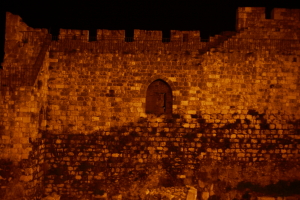
I started walking the patrol path toward the Zion gate, careful on the uneven stones beneath my boots. Nighttime sights of the city of Jerusalem, dipped in a soft yellow glow, interrupted by shadows and darkness. Silhouettes of old buildings, stone towers, and curved hills stood against the darker skies like giant waves in a frozen primordial ocean.

I savored the view for a moment, then returned my attention to my mission. No suspicious activity appeared in the vicinity. Really, there was no activity at all. The last people to return to their homes or cars had done so hours ago. I turned back and walked toward my sleeping buddies.

≈≈≈≈≈

We were officer school cadets brought here to reinforce the police securing the influx of visitors during the Passover holiday. Since ancient times, Pesach had been one of the three pilgrimage holidays for Jews. Jews in antiquity made the Mitzvah of Aliya Le-Regel, the deed of making the pilgrimage to Jerusalem from all over the kingdom. Although this tradition was now a relic of the past, the holiday still brought the masses to camp out in parks throughout Israel. Wherever anyone looked it seemed as if the entire population of Israel moved in pilgrimage.

We had arrived in the city a couple of days before to assume our duties. We were divided into small groups of a few soldiers each and dispersed to a variety of missions; manning guard positions in parks, patrolling streets and alleys, stopping mischief, and keeping peace and safety for all. Just the day before, our team patrolled a public park. We walked around in full gear for the entire afternoon and watched people picnic and eat together while children played around. We scanned for potential danger while assuming our presence as a deterrent for troubles.

≈≈≈≈≈

Breathing in the night air, I paced slowly, shivering, and fighting off weariness and boredom. I focused on the valley to the south, with its sprawled village of Silwan and the distant light of the other villages of East Jerusalem. I passed the sleeping pack of my buddies and continued down toward the Dung gate. As I neared the far end of the patrol path, I could see the edge of the Western Wall. Cold air blew from the desert, chilling my body despite my coat. I checked my watch. Only ten minutes had passed since I started my shift. Time crawled at moments like this. I knew checking my watch only slowed it down more. I kept walking.

The physical and mental pressure of combat service sometimes lulled a soldier into a safe mode, limiting one to the task at hand while ignoring or outright missing the bigger picture of the mission. The rigorous routine of security operations is overwhelming, throwing young soldiers into a tight cycle of guard duty, eat, rest, repeat. The passage of day and night becomes indistinguishable as everything revolves around the next call time. You could enter this survival mode of a sort; be ready for duty on time, rest, and sleep when possible, if possible. And don’t forget to eat. Mealtime may fall during sleep time. Still, this week’s assignment came as a welcomed break from the advanced training. We were allowed to slow down to enjoy a change in both pace and scenery.

≈≈≈≈≈

I reached the end of the path and turned to walk back uphill. The cold breeze blowing from the south gained speed in the narrow valley and washed over the wall, carrying desert scents over the ancient stones into the old city. My layers were no match for the onslaught. My misery slowed my patrol time even more. I let my thoughts wander to how many steps I will walk until the shift change and which position was cozier right now; laying on the ground or standing up? I searched for imaginary warmth in the distant shimmering lights. A comforting thought: at least it was not raining. In a few hours, the sun would be up. The temperature would rise. We would have breakfast, get a new assignment, and be somewhere else. More importantly – I wouldn’t be freezing.

Walking slowly, I looked at the dark path ahead of me. The irregular stones revealed nothing but shadows and uncertainty. My sleepy mind dismissed the vision as another reminder of my chilled agony, but it returned and stared at me. Waiting.

In an instant, I jerked to full alert, excited by a vivid insight. The deeper meaning of my being here with my fellow cadets just dawned on me. Our presence took on a sudden bright relevance. This was no longer just another typical security mission. I was not pulling a routine guard duty shift. Standing there in uniform and full combat gear with a gun at hand, I realized, I was a new member of a distinct and honorable group, a part of the company that carried the same duty for well over two millennia. I was a link in a long line of soldiers that continued through era after era, facing different enemies, wearing different gear and armaments, but living the same mission: Jewish soldiers, standing guard on the Wall of the Old City of Jerusalem. I doubted King David’s troops had worn coats as good as the one I had on. I no longer felt cold.


January 26, 2005

Dog Day Poetry

Jarrod stared at his laptop. The lines he typed an hour ago lurked on the screen, unmoved, uninspiring, uninteresting. He read the stanza from the top, hoping to jump-start his brain and add a few more lines to complete the poem. Nothing brewed in him. Instead, something else became clear. This was not a poem. Not even the beginning for one. It was a poor attempt at being smart, unique, thoughtful. He pondered whether to save it or junk it, and finally decided on the latter. The screen blinked and turned white again, the cursor blinking at the top left, challenging him to go at it again. He sighed, a little louder than was appropriate, given the circumstance.

The sound attracted some attention at the coffee shop. A woman seated at a table a few feet away from him raised her eyes from her book and glared at him admonishingly. Jarrod smiled apologetically and straightened in his chair. The laptop screen glared at him, like a teacher staring down a student tardy with his school work. He placed his hands on the keyboard as if hoping they will start typing away and do his work for him, relieving his anxiety. But to no avail. The screen remained black, as was his mind.

Frustrated, he closed his laptop and looked around. The woman at the table near him read her book and ignored him. A couple at the corner table was having a conversation over salads, but he could not hear them. The two baristas organized items behind the counter. Outside on the street, the traffic hummed its casual city theme. Jarrod deliberated whether to leave the coffee shop or stay. His coffee cup sat empty, and he had no desire to refile it. The woman with the book looked attractive. He might try to strike up a conversation with her, perhaps mention his writings. He will read her a poem or two, impress her, maybe invite her to have dinner with him. Oh, who was he kidding? He could impress no one. He was an unknown poet, one of millions just like him. Creative, hopeful, frustrated. Spending his afternoon at a coffee shop with nothing to show.

Over the years he read some of his works at different gatherings of local writers. He attended a number of regional conventions, listened to the lectures, and tried to interest some publishers in his writings. One of them, an older man who resembled Jarrod’s high school shop teacher looked at his folder, and returned it to him after a quick scan, sneering “Keep working and see me in five years.” Five years?! He has been honing his poetry for more than twelve! He thought he was a good poet. He knew he was a good writer. But sadly, he was the only one to recognize those facts.

Jarrod wanted to get noticed, to be successful, he very much wanted to do so. Get published and earn a living from his books. Be the one everyone waits for before starting a poets’ meeting, come to seek advice from, try to befriend, wish to be like. He wanted to be everything he was not. But he could not achieve that to save his life. Hack, even the woman reading next to him did not pay attention to him. She kept to her book, turning page after page, enjoying herself. The only time she noticed him was when he sighed. Well, at least that was something. The couple in the corner did not turn their heads toward him even once. What does one need to do to get noticed? What??

Get noticed, he thought. Be famous. Be known. His endless efforts at writing clever, engaging, original poetry yielded no results. Maybe he should get recognized for something else, and let his poetry rise naturally to the surface as people learn of him. He needed to perform some heroic act. Save someone in a dangerous situation. Someone’s life, just like in the movies. His heart raced, imagining him throwing himself into danger while bystanders look on. Save a person. Save the day. Be famous. Be known. Oh, come on! He was no hero. Only in his dreams. He wouldn’t offer to help an old lady to cross the street, afraid she will mistake his offer for a purse-snatching attempt and smack him with a bag, yelling for bystanders for help. He sighed again, careful to do it quietly. He was always misunderstood. His poetry. His ambitions. Everything he was. His entire life was one long saga of misunderstandings. But he was going to change that, he decided. He was going to change that today.

Jarrod looked outside, hoping to find a clue in the urban scenery. He found it quickly, standing across the street under a green and white sign. He gathered his belongings into his bag, threw his cup in the trash can by the door, and left. He crossed the street, careful with the drivers who had to negotiate his jaywalking. His intended target had a glass door that felt heavy and cool to the touch. He pushed it in and entered the lobby.

“Welcome to Merchant Savings Bank. May I help you?” the teller in the middle window motioned from him to approach.

“Just a second.” Jarrod took out his folder and opened it as if searching for some paperwork. He looked to both sides. There were no security guards visible. One would occasionally stand by the front door or somewhere in the lobby. If a robber walked in right now, no one would be there to stop them. No one but him. He will be the one, that hero, the one everyone will recognize, the one who will give interviews on TV later on. Jarrod noticed a sitting area to the right; two sofas and a table. A self-help coffee machine stood near it. He walked over and sat down, facing the front door. He reopened his folder and shuffled the papers in it.

“Good afternoon, sir,” a lady came out from the office to his left. “Is someone helping you?”

“Umm, I… I mean… not yet,” he fumbled his words. “I… I’ll be ready in a few minutes,”

“Well, let me know when you are ready, and I will be happy to help you,” she smiled and returned to her office.

Jarrod checked his watch. If a robber was not going to walk through the front door in ten minutes or so, he will have to come up with a new plan. He couldn’t just sit here the whole day and wait. Someone was bound to get suspicious and call the police. He will need to answer questions, be embarrassed, or worse. The worse part worried him. He would not be able to afford a lawyer. He would lose the small savings he had. No, he realized. Unacceptable solution. He needed to think of a different plan.

Jarrod stood up. The banker who addressed him earlier rose from her chair.

“I’m sorry, I don’t have all my papers with me,” he said before she made it out of her office. She nodded and returned to her work. Jarrod walked toward the front door. He needed to think of something.

He was about ten steps from the door when a bearded, rough-looking man walked in. The man carried a dark object in his hand and headed straight to the tellers’ window. A charge went through Jarrod’s body. This is my lucky day! He redirected his steps to intercept the man.

“Stop! Don’t move!” he yelled. The robber continued to walk as he turned his head toward the source of the noise.

“Stop!” Jarrod yelled again. The robber realized he was the target of the holler, stopped, and turned toward Jarrod.

“What is your problem?” he asked in an angry voice and looked around as if trying to assess additional danger.

“Put your hands up and get down on the floor,” Jarrod said in a stern, authoritative voice. “Now!” he said louder.

“You’d better chill before you get yourself hurt,” the robber stood in place. He was not going to obey Jarrod’s orders. Worse, he was ignoring Jarrod just like everyone else did all the time. He was disregarding Jarrod and about to rob the bank, just like that. Jarrod needed to act quickly before this robbery got away from his control.

“Is there a problem?” a man in a tan suit and blue tie featuring the bank’s logo on it approached them. The tag on his jacket read “William Hobbs, branch manager”.

The bearded man reacted first. “Hey, Bill. I came in to make my deposit and this weirdo started yelling at me,” he raised his hand to show the dark item he carried, a leather money envelope.

“And who are you, sir?” the branch manager turned to Jarrod.

“I’m… I’m,” Jarrod mumbled. “I thought he was robbing the bank.” He held tight to his folder.

“You’re damn crazy,” the bearded man dismissed him, and instantly turned his sight to the door. Everyone did the same, including Jarrod.

Two police officers walked in with their guns drawn. Blue light flashed atop a police cruiser stopped in front of the building.

“False alarm gentlemen,” the bank manager walked toward them with his hands up. “We had a simple misunderstanding here.”

“Thanks, Bill,” the first officer nodded at the bank manager and looked around. He replaced his gun in his belt. The second officer followed suit and reported something into his shoulder mic.

“So, let me get the story here,” the first officer took a step forward.

About twenty minutes later the officer finished interviewing Jarrod, the bearded man, the manager, and the lady banker. He handed Jarrod a summons for disturbing the peace with a court date for nine weeks later. Deflated, Jarrod left the bank. A TV reporter rushed to him as soon as he stepped outside.

“Were you involved in the incident earlier today?” he placed a microphone in front of Jarrod.

“Yes, yes I was,” Jarrod ran his hand through his hair.

“What were you doing at the bank?” the reporter moved closer.

“My name is Jarrod, Jarrod Sunnyvale. I am a poet. I was at the coffee shop there, across the street,” he pointed behind the reporter’s shoulder.

“I meant, what were you doing at the bank?” the reporter repeated his question.

“Like I said, I write poetry, and I was at the coffee shop, writing, and…” The officer who interviewed them exited the bank. The reporter abandoned the interview and rushed to intercept him. The cameraman lifted the video camera with its tripod and rushed after him. A red Channel 3 News logo sticker covered the right side of the camera. Jarrod looked at the small crowd watching the scene and waited for the news crew to return and continue his interview. The reporter proceeded to interview the bearded man and the bank manager. He and the cameraman returned to the news van and loaded their gear. Jarrod approached them but they ignored him and drove away. The street returned to its familiar hum. The sun rested low over the building to the west. Jarrod shuffled home slowly.

Hours later, Jarrod sat alone in his apartment. The court summons rested on the table, right next to his empty dinner plate. The 10 o’clock news came on, and he waited anxiously for his face to appear on the screen. Someone will notice, he thought. Someone is watching and is bound to recognize him. He was proud of his effort. It wasn’t the heroic act he imagined, but it was something. Not too dangerous, no one got hurt, and he got to talk to a TV reporter! He could not recall what exactly he said on camera, but he was pretty sure he mentioning his poetry. He was hopeful and eager to find out how he did. That story was sure to come up next, right after the weather report.

“And that’s the news for tonight,” the anchors returned to the screen. “Thank you for watching, and we’ll see you again starting at 5 tomorrow.” The program’s logo appeared, and a set of commercials began playing. That was it. Disappointed, Jarrod turned off the TV. There was not a single mention of his ordeal. Not a picture with his name lettered underneath. No recognition of his bravery or dedication to the written word. No chance at fame and success. He remained unknown, the same as he was before, the same he will always be. He opened his laptop and began to write.


December 3, 2014

Mikel

Mikel froze in place and listened. He could sense movement anywhere the building through his feet. The wood floor hummed like an orchestra, telling of and pointing out creatures large and small, moving about, walking, running, sneaking, hunting. The wood building was not very large. It had a below-ground level, an above-ground level, and an upper floor. Despite its size, it had plenty of room for all of its inhabitants. The temperature inside held steady most days, and no predators ever came in. Well, other than the giants, of course.

There were three giants living inside. They used every room, but rarely in the below-ground level. Mikel preferred to stay there for that reason. To be out of sight. To hide. The giants ate twice a day in the eating room, where the food was stored. Once in the morning after they cleaned themselves, and again in the evening after they returned from hunting and gathering, and before they moved to rest in the upper level. Mikel kept inside at all times. His choice. Leaving the building was too dangerous. He learned that through numerous painful lessons since he was young. Every time someone left the building to gather food, he would never see them again. None of them ever returned. Predators, no doubt, go them. Animals, maybe even other giants. The group became smaller and smaller until a week ago when it was down to just him and Moona. Oh, poor Moona.

There was not much to do inside, and less so to see. That would not have been such a big problem had he been able to eat normally. But gathering food was incredibly challenging, and became even more so since the giants discovered them, his group. Every time one of them found a new way to gather, the giant would defeat it and the food would be hidden again in harder to reach places. The smallest of the three giants was also the most careless and would leave pieces of food everywhere; on the floor, on the plate, in the bucket. Mikel thought it did that on purpose, so it could watch them eat it. Very strange. There was that time when Mikel found some food on the floor in the eating room and started eating it on the spot. He was so hungry. He almost lost his mind when he realized the small giant watching him silently from the stairs. Mikel ran and hid so fast he forgot to take the food with him. What a loss. Damn it!

Movement! Mikel listened intently to the heavy steps. It was one of the giants. It descended the steps and walked into the eating room. It was so close, right on the other side of the wall! Mikel shrunk his body and lowered himself to the ground, trying to disappear into the wood crevices. He hoped his stomach will not growl. He had not eaten in three days, maybe more. Getting discovered, he knew, would mean certain death. He held still. The only part of his body that moved was his heart, and it was racing.

The giant stopped. Mikel recognized the steps instantly. It was the giant. Despite its mammoth size, this giant was fast. Very fast. In a flash, Mikel remembered it chasing after Moona while another giant, the long-haired companion, howled from the top of the stairs. Mikel shivered in horror as he recalled Moona’s scream when the giant lowered the large wood on her body, killing her instantly. There was no hesitation in its move, just pure evil. It picked Moona’s limp body with its enormous fingers and carried her outside. When it returned a short time later it howled at the other giant, and they both started looking for Mikel and the others. They did not know he was the only one left. How could they? Lucky for Mikel he anticipated they would do that and hid quickly behind the curtains in the sitting room. He knew all the good hiding places. He also knew not to panic and run when the giant came near him and moved the curtains from side to side, searching. Mikel just hung there with his eyes closed, thinking of Moona. It was the scariest moment of his life.

Mikel broke his thoughts and returned his attention to the giant. It made tearing sounds in the eating room. Curiosity overwhelmed Mikel. Was it preparing food? Not at this time. The giants already ate and would turn to rest soon. So, what was it? A new sound emerged, sharp, high-peached squeaks. Metal rubbing against metal, he guessed. Was the giant building something? He wished he had a better vantage point, but moving while the giant was near was risky. He needed to think of something. Maybe if the giant was so busy with this activity it would pay less attention to its surroundings? Mikel carefully considered where to move to. He had to stay in this room, in the dark, and go somewhere with a direct line of sight to the giant. The sounds the giant made came from the counter, which made sense. The giant only did things on the counter, never on the floor. It was too big to get down, and the counter probably made it easier for it to do things, like preparing food. Mikel listened again. The giant continued with its activity. It’s time, he decided. He moved slowly along the wall, careful to avoid the squeaky floor areas, not to disturb objects along the way, do anything that could alert the giants to his presence. He stayed in the dark, keeping a good distance from the patch of light that fell on the floor from the eating room. He reached the other side of the room and hid behind the structure that held the wonder thing. Many times, one or more of the giants would gather in the room in front of it and watch as other giants made of light appeared on it and howled. But it was now quiet and dark. Mikel crouched in his hiding spot and looked at the giant. It stood with its back to Mikel and did something with its hands. This was not good enough. Mikel needed to find a better spot.

STOP!

More steps came from upstairs. Mikel instantly recognized the small giant. He heard it walking down the stairs before it appeared and stood next to the giant. They howled at each other a number of times. Mikel retreated slowly, letting the darkness cover him, hide him, protect him. He could still see well. With both of them only steps away from him he could not move anywhere. He waited. Shivering. Scared. Hungry.

The giant stopped making the metallic sounds and turned to the smaller one. It held something in its hands and showed it to the other. Mikel did not see anything like this before. It was a gray-colored device, probably a little larger than Mikel. The giant manipulated parts of the device and howled, but the smaller one did not howl back. Instead, it looked around the eating room. The giant howled again. Still, the smaller one remained mum. It now looked straight at Mikel’s direction. Could it see him? DID it see him? It was too late to move. Mikel closed his eyes. They were big and dark, but could reflect in the light coming from the eating room, exposing him. He listened and hoped. He felt no movement on the floor, only the giant continued howling.

Mikel peeked through the cracks. Both giants still stood facing each other. The smaller one howled, but in a lower voice. The giant opened the food door and took out a piece of soft cheese. Cheese! Mikel gulped. This was his favorite thing to eat! Oh, if he could only get one piece of this, just a taste, he would be so happy! If the giants would only drop it on the floor and not notice, forget to check, and leave. He would get it and eat it, and leave nothing behind, not a trace for them to find.

The howling stopped. Mikel watched as the giant placed the cheese into the device. It slowly pressed on it, which made the squeaky metallic sound again. The giant placed it on the floor. Mikel was stunned. Why was it doing that, placing food on the floor? Was it doing so on purpose? The giants were clean creatures that never left food behind them. Perhaps this was a new way for the smaller one to eat? Mikel could not figure this out. He waited.

The giant howled again, and the two turned and left the eating room. The light vanished instantly, and the place fell dark. Mikel heard the heavy footsteps. The giants climbed up the stairs. Mikel wanted to leap out of his hiding spot and grab the food, but waited. He could still hear movement upstairs. He would not dare getting exposed. He decided to wait. His eyes adjusted to the dark. The device rested in the middle of the eating room floor. The cheese smell hit his nostrils. So good! His stomach growled. Soon, he would quiet his hunger.

Mikel did not move. He relaxed his body and waited. The floor vibrations conveyed sounds from upstairs. They gradually quieted, then stopped. The giants were probably resting. Mikel stepped quickly into the eating room, the cheese smell pulling him in. He reached the device and investigated quickly. The cheese rested in the middle of the device. This would be easy, he thought. He slowly circled the device, careful not to make a sound. The cheese smell hit his nostrils hard and caused him to salivate. He completed a second turn and figured that the best way to reach the food would be through the opening on the smaller side. He stepped in and felt the cool metal against his body. The cheese was stuck on one of the metal parts. Mikel held it between his nails. Eat, finally! He pulled.


October 30, 2019

Out of the Box

All beginnings are tough, but many of those difficulties become endearing moments in time. Moving to a new city is an example. The list of the personal adjustments you go through is endless and may last months, even years. The basic adjustments are common to all moves. Get to know the new neighborhood, locate the good supermarket. Find work. Learn traffic patterns to and from work. Make friends, and master the local customs. Now imagine doing all that as an immigrant. A new country and a new language. EVERYTHING is new.

Immigrants landing in a new country take these efforts and more to make their new home feel like one.  It may take them years to bridge language and cultural barriers and begin inhabiting local conventions. The first few weeks and months are the most volatile for the immigrant. Every aspect of life is foreign and odd, and the learning curve is at its steepness. Such was my experience when I arrived in the United States soon after graduating college.

The time was the late eighties. Flying overseas still carried a unique aroma. The information age was in its infancy, and physical distance played a significant factor in isolating people and cultures. Global trade meant something entirely different than the diverse bounty we enjoy on every store shelf today, not to mention the advent of online shopping and its far universal reach. Most of the products you were able to purchase at the supermarket, the pharmacy, and the furniture store back then were items produced locally or regionally. For those reasons, anyone who made an international trip was expected to bring back fruits of the foreign land they visited. Exotic chocolate, cheese, and alcohol from Europe, stylish T-shirts and shiny sneakers from America, and hand-made crafts from Africa. So in that spirit, I left for the United States packing a request list, a short one at that. In fact, it had only one line – a bottle of Excedrin caplets, requested by my mother-in-law. “Mail it when you can,” she said, “no rush.” I promised I will do that as soon as I could.

And so I did. I have been in the country for a couple of weeks, and gradually became acquainted with basic Americana. I began to understand the differences between the dozens of choices of bread lining the supermarket bread aisle, or really just learned to identify the one we liked. I became tolerant to the constant aroma of burnt oil coming from the McDonald’s restaurant across the street. I enjoyed the freedom of turning right on a red light and the challenge of left-turn on green. Everything was new. After years of watching American life in the movies, I was finally living it all. So following a trip to the supermarket, I walked into a nearby drugstore looking for a bottle of Excedrin. And just like the bread aisle, I found it offered in many choices. Different forms of pills or gel tabs. For a headache, tension, or a migraine. Different bottle size and different strengths, for daytime and nighttime. Impressed and confused, I deliberated for a while. Finally, I settled on a value pack bottle of regular strength in a red box. Back at the apartment I wrapped it in brown paper and scribed the address on its side. Next stop, another first. U.S. Mail.

The suburban post office was neat and organized. Morning light filled the space through blue horizontal blinds. Dark rope directed the moderate line of customers toward three awaiting clerks. People stood quietly with ample space behind each other. Soon it was my turn. The large man with the shiny bald head standing in the far right station looked at me with a blank expression as I stepped over. I placed my box on the counter. “Package to Israel,” I said. The clerk lifted a custom-declaration form from his side and readied a pen in his left hand. “What’s in the box?” he asked with a black stare.

The question and the clerk’s menacing presence stumped me. I suddenly forgot the brand name of the pills and was not sure what to call my parcel. I tried to think of how to translate the Hebrew term for “medication” to English but was uncertain which word to use, as there is more than one. Think fast!

And then it occurred to me. I bought it at the drug store. Of course! “Drugs,” I said.

Everything froze. The clerk standing in front of me, the people in line, the other clerks waiting on customers, the dust particles glistening in the slowly moving air. The entire post office stood silent.

I looked at my clerk. I knew I said something wrong, but could not think of what exactly. I rushed back in my mind over what I said, but everything computed back to the same result. I was right but something was wrong. Badly wrong. I did not dare to move. My clerk did not move either. He only scanned the room with his eyes, then took a deep breath. He had a situation on his hand, and everyone waited for his next move.

With his shoulders still locked in a tense pose, he lifted the package by his left hand and looked at me. “What do you have in the box?” he asked again.

I knew better than to repeat the same line. I had to think fast and give the right answer this time, to save myself from further embarrassment. Simplify! Where did I buy it? No, never mind. What did I buy? Yes, that’s it! “Medication for headache” I managed to say.

Everyone in the post office exhaled together in collective relief. Motion returned to the room. The dust particles resumed their slow movement. My clerk relaxed his shoulders and wrote something on the custom-declaration form. I paid and turned to the door. There was a lot I had to learn out there in the new country.


February 17, 2018

The Ukrainian

Igor and Anna in 2005

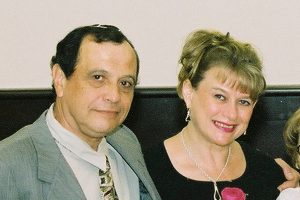
I have known Igor for many years. But to be precise, I did not know him at all. I knew Igor the same way you know many people at your synagogue, that is to say, you know their name and who they are. A face in a familiar crowd. Enough to say hello when you meet them on Shabbat, during holiday services, and other synagogue activities. Igor was quite a bit older than me, and was perhaps better known at our synagogue as Anna’s husband. And everyone knew Anna. She played piano at many of the synagogue services and activities. Still, Igor remained just another face in the crowd we call our congregation.

All that changed one day a few years ago. Igor and I happened to sit next to each other at a Shabbat lunch, and naturally, we struck a conversation. As is often the case when two Jews meet for the first time, we played a game known affectionately in certain circles as Jewish Geography. Who are you? Where are you from? Where is your family from? How did you end up here? Jewish people are numbered by a few millions around the world, and this game offers its players an opportunity to discover common connections and relations through their Jewish ancestry. I was born and raised in Israel. Igor and Anna were members of a Russian Jewish group of people who came to Omaha following the fall of the Iron Curtain. Except that they were not from Russia, they were from Ukraine.

Igor asked about my life growing up in Israel, and about my family history. When I mentioned to him that my father was born and raised in Chernovitz, Romania, his eyes lit up. Chernovitz? Romania? That turned out to be a defining moment in our relationship. The moment we became real friends. Igor, as it turned out, knew Chernovitz quite well.

My father was born in the winter of 1929 as a single child to a sheet metal fabrication plant supervisor father and a homemaker mother. The Second World War found his small family as an oppressed minority caught between the Axis forces and the Red Army. Following the reincorporation of Chernovitz into the Ukrainian SSR, the remaining Jews who lived in the area left. All I know is that my father’s family spent four years as refugees in Bucharest, the Romanian capital, before finally setting sail to Israel. I knew little else about my father’s life and childhood. The most I dared to ask him about that time period was for a Holocaust Remembrance day paper I worked on in fourth grade. My father brushed off my inquiry, and I learned to not ask again. This was not unusual. Many Holocaust survivors chose to leave their past behind, and concentrate on their new life in the young State of Israel. My father was an educated man who spoke seven languages. But with us, he only spoke Hebrew, a language he learned for the first time as a twenty-one-year-old when he made Aliya in 1950. Dad spoke perfect Hebrew, without a trace of foreign accent, the same way he spoke the other European languages he was fluent in. Chernovitz, Romania, and the life he had before he immigrated to Israel were left buried in a heap of a forgotten past.

Igor was younger than my father by a few years, but their makeup was similar. Both grew up in the same region, and as young men suffered through oppression for being Jewish. They each were fluent in a number of languages. They worked and succeeded as engineers to build the world and better secure it. They both had multiple areas of interest, and possessed vast knowledge in a number of intellectual fields. Above all, they were both loving and devoted fathers.

By the time Igor and I sat for that conversation, my dad had already passed. But here next to me sat a man in my father’s likeness. In his heavy Russian accent, Igor told me of the birthplace of my father, and of the life of a Jewish community that was no longer there.

Igor knew Chernovitz well from his many business trips to the region, while he lived in Kiev. His stories were informative and funny, and our many conversations interesting and enlightening. Igor,s homeland tales opened for me a new window of knowledge and understanding about a place I knew little about. His stories added form and detail to my own family history, and gave me a new way of appreciating my father’s early life. Our conversations continued to soar beyond that town from a different world and time. Igor and I talked about politics, Jewish life and customs, world history, and many other topics Igor knew a lot about and was happy to engage in. Our conversations were akin to those I enjoyed with my dad in earlier times. Meeting and talking with Igor was always enjoyable.

There was another thing. Following that first conversation, Igor had a nickname for me. “Ukrainian,” he called me, a term of endearment. Each time we met, he would greet me with a big “Hello Ukrainian!” and a big smile. It sounded great in his Russian accent. He often introduced me to others that way. Not everyone got the joke, but we had a lot of fun bantering like this.

All this ended unexpectedly in January 2017. Igor passed away suddenly following a short illness. His untimely death left a hole in the hearts of many, first and foremost his wife Anna, and his loving children and grandchildren. After his funeral, I sat down and wrote a note of condolences to Anna. I included a part of this story in the note, and handed it to her during the Shiv’a, the seven days of the mourning period in the Jewish tradition. I am now happy to share this story here with Anna’s blessings and encouragement, as a testimony and honor in Igor’s remembrance. May his or her memory be for a blessing.


January 18, 2018